
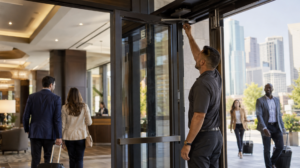
Houston hotels live and die by first impressions. Guests notice the lobby lighting, the front desk greeting, the room temperature, the cleanliness of the elevator, and how smoothly everything feels from the moment they walk inside. What they usually do not notice is the one piece of hardware working quietly all day long on guest rooms, stairwells, conference rooms, pool entrances, employee areas, kitchen doors, and exterior access points: the commercial door closer.
That silence is the point. A properly working door closer should do its job without becoming part of the guest experience. It should control the door, close it safely, latch it properly, and protect the building without banging, slamming, dragging, sticking, or staying open when it should not. But when it fails, guests notice fast. They hear it. They feel it. They complain about it. 🚪
For hotels in a competitive hospitality market like Houston, small maintenance issues can become reputation problems. As the city continues to attract business travelers, convention attendees, families, sports fans, and international visitors, hotel operators cannot afford to ignore the hardware that protects safety, comfort, accessibility, and daily operations.
Houston’s Hotel Market Is Too Competitive for Small Problems to Become Big Complaints
Houston is one of the largest and most active cities in the United States, with a major hospitality economy tied to conventions, medical travel, energy business, sports, dining, shopping, and tourism. The city’s scale alone makes hotel operations more demanding. According to Wikipedia’s overview of Houston, Houston is the most populous city in Texas and one of the largest cities in the country, giving local hotels a constant mix of travelers, workers, families, and event guests moving through their doors every day.
That level of traffic creates wear. Hotel doors are not used like residential doors. A guest room door may open and close dozens of times a day. A stairwell door may be used by staff, guests, cleaning crews, and emergency personnel. A lobby entrance may see hundreds or even thousands of cycles in a busy week. Meeting spaces, ballrooms, restaurant entrances, storage areas, pool gates, and back-of-house doors all rely on closers to control movement and maintain order.
The Houston hotel market has also shown strong signs of activity. Houston First reported that the Houston hotel market posted a record-breaking first quarter, driven by conventions, major events, and leisure travel. When more guests are coming through the building, every weak point in the property becomes more visible. A door that slams at midnight is no longer just a maintenance issue. A guest room door that does not latch can become a security concern. A heavy conference room door that closes too quickly can create an accessibility or injury risk.
Hotels already spend heavily on branding, housekeeping, guest service training, online reputation management, and property upgrades. Door closers may not be glamorous, but they help protect all of those investments.
The Guest Experience Starts Before the Guest Reaches the Room
A hotel guest may never know the term “door closer,” but they know when a door feels wrong. A lobby door that jerks shut too fast feels careless. A stairwell door that slams sounds disruptive. A guest room door that does not fully close creates anxiety. A pool entrance door that sticks becomes annoying. A restroom door that closes too slowly can feel awkward and uncomfortable.
Hotels are built around smooth movement. Guests arrive tired from flights, long drives, business meetings, medical appointments, tournaments, weddings, and conventions. They expect the property to feel polished. Even when they cannot explain what is wrong, they sense when something feels neglected.
That is why hardware matters. A properly adjusted commercial door closer helps a door close with control. It prevents unnecessary noise. It supports privacy. It helps maintain temperature zones. It protects security. It supports code compliance. It can reduce damage to frames, hinges, locks, walls, and glass.
For Houston hotels, especially properties near the Galleria, Downtown, the Medical Center, NRG Stadium, George Bush Intercontinental Airport, Hobby Airport, and convention districts, doors operate under constant pressure. These are not quiet buildings with light use. They are moving environments. A commercial door closer is one of the small components that keeps that movement from turning chaotic.
Hotel Safety Depends on Doors Closing the Right Way
One of the most important reasons hotel operators should pay attention to door closers is safety. In hospitality properties, doors are not just decorative or functional. Many are part of larger safety systems. Stairwell doors, fire-rated doors, corridor doors, mechanical room doors, electrical room doors, and exterior access doors often play a role in protecting guests and staff.
When a door closer fails, the door may not close fully. It may close but fail to latch. It may slam. It may close too slowly. It may be propped open because employees are tired of fighting with it. Any of these problems can create risk.
A stairwell door that does not latch properly may compromise smoke control. A back entrance door that does not fully close may invite unauthorized access. A door that slams too aggressively can injure a guest, child, housekeeper, or delivery worker. A door that is too heavy or fast may create accessibility problems for elderly guests, guests with disabilities, or families carrying luggage.
Hotels are also highly review-driven. A guest who hears slamming doors all night may not care that the property recently renovated the lobby. They may only remember that they could not sleep. A guest who feels unsafe because their room door did not close correctly may mention it online. A guest who sees a staff-only door hanging open may question the overall security of the property.
In the hotel business, trust is part of the product. Door closers help maintain that trust quietly.
Houston Events Put Extra Pressure on Hotel Properties
Houston is an event city. Major conferences, conventions, sports events, business gatherings, medical conferences, cultural festivals, and international visitors all create waves of hotel demand. Houston First’s report on major hospitality projects and events coming to Houston in 2026 shows how much attention the city’s hospitality industry is receiving as new hotels, airport improvements, downtown projects, and major events continue shaping the guest experience.
That matters because event traffic changes how hotel doors are used. During a quiet week, a small door issue might be manageable. During a packed convention weekend, that same issue can become a daily complaint. A ballroom door closer that is out of adjustment may frustrate event staff all day. A lobby restroom door that slams may bother guests during breakfast. A side entrance that does not latch may become a security concern when crowds are moving in and out.
The Houston Business Journal’s Hotels & Lodging News regularly tracks hotel development, renovations, openings, and market movement across the area. That kind of activity is good for Houston, but it also raises the bar. When new and renovated properties are entering the market, older hotels need to make sure basic maintenance details do not make them look tired by comparison.
A guest may not know whether a property has the newest rooftop restaurant or the most expensive lobby furniture. But they will know when their room door slams every time someone enters the hallway.
Door Closers Can Affect Noise, Comfort, and Sleep Quality
Hotel reviews often come down to comfort. Guests mention beds, cleanliness, staff, parking, breakfast, temperature, and noise. Door noise is one of the most preventable sources of guest frustration.
A poorly adjusted door closer can cause repeated slamming. In a hotel hallway, that sound travels. One guest leaving early for a flight can wake several rooms. Housekeeping carts moving in and out of service areas can create constant banging. Stairwell doors can echo through multiple floors. Conference area doors can interrupt meetings, weddings, and events.
The problem becomes even more noticeable in hotels with high occupancy, large group blocks, youth sports teams, convention travelers, or late-night arrivals. What begins as a hardware issue becomes a guest satisfaction issue.
A properly installed and adjusted closer helps control the speed and force of the door. It can reduce slamming, improve latching, and create a more polished feeling throughout the property. That helps protect sleep quality, hallway atmosphere, and the overall impression of professionalism.
Hotels spend a lot of money trying to create comfort. A noisy door closer can work against that investment every single night.
Commercial Door Closers Help Protect Security and Access Control
Security is another major reason hotels should inspect and maintain door closers. Many hotel doors are connected to access control systems, card readers, panic hardware, locks, exit devices, alarms, and restricted areas. If the door does not close and latch properly, the security system may not work as intended.
A back-of-house door that stays slightly open can allow unauthorized access. A pool gate that fails to close can create safety concerns. A parking garage entrance door that does not latch can expose the property to risk. A stairwell door that closes too slowly may be misused. A guest room door that needs to be pulled hard to latch can make guests feel uneasy.
This is especially important in a city with heavy business and convention travel. Meetings Today has covered how Houston is building for the future and taking the world stage in 2026, including hotel development, convention growth, and major hospitality projects. As Houston welcomes more visitors, hotels must keep everyday security details tight.
Door closers are part of that security layer. They are not the only factor, but they are one of the most visible and frequently used. A great lock cannot do its job if the door does not close correctly.
Hotels Should Not Wait Until Guests Complain
One of the biggest mistakes hotel properties make is waiting until a door closer fully fails before addressing it. Door closers usually give warning signs. The door may start closing too fast. It may leak fluid. It may make noise. It may stop latching consistently. It may require guests to pull it shut. It may slam during certain weather conditions. It may drift open after use.
These warning signs should not be ignored. In a hotel, a single bad closer can affect dozens or hundreds of guest experiences in a short period of time.
Regular inspections should include guest room doors, stairwells, exterior entrances, restroom doors, pool gates, meeting room doors, kitchen doors, office doors, storage areas, and employee-only spaces. Maintenance teams should look for leaks, loose arms, broken brackets, missing screws, closing speed issues, latching problems, door frame damage, hinge wear, and signs that staff or guests are propping doors open because they are difficult to use.
For local hotels that need professional help, Commercial Door Closer Houston service can help identify, repair, adjust, or replace the door closers that keep a property safe, quiet, and functional.
The Best Hotel Maintenance Is the Kind Guests Never Notice
Great hotel maintenance often goes unnoticed because it prevents problems before they reach the guest. Nobody leaves a five-star review saying, “The stairwell door closed beautifully.” But they may leave a bad review if it slammed all night. Nobody praises a pool gate for latching properly, but they may complain if it feels unsafe. Nobody compliments the conference room doors when they work correctly, but they notice when one bangs during a presentation.
That is the quiet value of commercial door closers. They help hotels maintain a sense of order. They reduce friction. They support safety. They protect privacy. They help staff move efficiently. They make the building feel better without calling attention to themselves.
Houston’s hospitality industry continues to evolve. The official Houston Hotel Playbook reflects the city’s focus on helping hotels maximize visibility and prepare for major visitor opportunities. But visibility cuts both ways. More guests mean more chances to impress, and more chances for neglected details to become public complaints.
A hotel does not need to wait for a guest to point out a door problem. By then, the issue has already affected the experience.
Conclusion
Every hotel in Houston should pay attention to commercial door closers because they are small parts with a large impact. They influence guest comfort, sleep quality, safety, security, accessibility, staff efficiency, and the overall impression of the property. In a growing and competitive hospitality market, the details guests do not consciously notice are often the same details that make a hotel feel professional, safe, and well-managed.
A door closer is not just hardware. It is part of the guest experience. It is part of the safety system. It is part of the building’s daily rhythm. When it works properly, everything feels smoother. When it fails, guests notice the problem before management may realize how serious it has become.
For Houston hotels preparing for more visitors, more events, more reviews, and more competition, now is the time to inspect the doors guests, staff, and vendors use every day. A quiet, controlled, properly closing door may not seem exciting, but in hospitality, the best details are often the ones that prevent problems before they ever reach the front desk.