
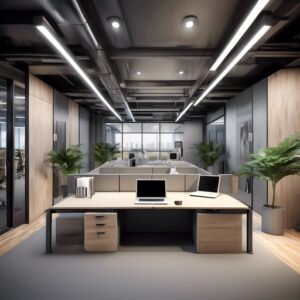
In recent years, the hospitality industry has been witnessing a significant shift in how hotels approach their infrastructure needs. One of the emerging trends gaining traction is the adoption of prefab office buildings. These modular structures, once primarily associated with residential and commercial sectors, are now revolutionizing the way hotels manage their operational spaces. This article explores the reasons behind this growing trend and delves into the benefits that prefab office buildings bring to hotels.
Efficiency and Speed of Construction
Prefab office buildings offer hotels a faster and more efficient way to expand or renovate their office spaces. Unlike traditional construction methods that can be slow and prone to delays due to weather or on-site challenges, modular buildings are constructed off-site in a controlled environment. This controlled environment reduces construction time significantly, allowing hotels to complete projects in a fraction of the time compared to traditional builds.
Cost-Effectiveness
Cost considerations play a crucial role in any hotel’s decision-making process. Prefab office buildings often provide cost savings through reduced labor costs, minimized material waste, and streamlined construction processes. Additionally, the predictable pricing associated with modular construction helps hotels manage their budgets more effectively, avoiding unexpected expenses commonly encountered in traditional construction.
Flexibility in Design and Customization
Contrary to the misconception that modular buildings lack design flexibility, today’s prefab office structures offer a wide range of customization options. Hotels can choose from various layouts, finishes, and architectural styles to match their brand identity and operational needs. Moreover, modular construction allows for future expansion or relocation of office spaces with relative ease, providing hotels with long-term flexibility in adapting to changing business requirements.
Sustainability and Environmental Benefits
Hotels are increasingly prioritizing sustainability in their operations and infrastructure choices. Prefab office buildings are inherently more sustainable than traditional construction due to several reasons:
- Reduced construction waste: Off-site construction generates less waste compared to on-site builds.
- Energy efficiency: Modular buildings can incorporate energy-efficient designs and materials, reducing operational costs related to heating, cooling, and lighting.
- Potential for LEED certification: Modular construction methods align well with green building standards, allowing hotels to pursue certifications like LEED (Leadership in Energy and Environmental Design).
Minimal Disruption to Hotel Operations
Maintaining guest satisfaction and operational continuity is paramount for hotels. Prefab office buildings minimize disruption to daily operations since much of the construction occurs off-site. This reduces noise, dust, and other inconveniences that could affect guests and staff during the building process. Hotels can continue providing seamless service to guests while expanding or renovating their office spaces efficiently.
Quality Control and Consistency
Modular construction emphasizes stringent quality control measures throughout the manufacturing and assembly processes. Factory-controlled environments ensure that each module meets high standards of craftsmanship and durability. Hotels benefit from consistent quality across all components of their prefab office buildings, resulting in reliable and long-lasting structures.
Adaptability to Urban and Remote Locations
Hotels located in urban areas or remote destinations face unique challenges when it comes to construction logistics. Modular buildings can be transported and assembled in diverse locations, making them suitable for various environments and site conditions. This adaptability allows hotels to expand or establish office spaces in places where traditional construction methods might be impractical or costly.
Conclusion
The shift towards a prefab office building reflects a broader trend in the hospitality industry towards innovation, efficiency, and sustainability. By embracing modular construction, hotels can optimize their operational spaces while achieving significant cost and time savings. The benefits of prefab office buildings—from speed and cost-effectiveness to sustainability and design flexibility—position them as a compelling choice for hotels looking to enhance their infrastructure. As this trend continues to evolve, prefab construction is likely to play an increasingly integral role in shaping the future of hotel development and management strategies.